Friday, October 15, 2010

Kermes 2010


At 9am the activities were just starting to pick up momentum.  The small parking lot in front of the CCBN had been emptied of cars and the dozen or so spaces filled with tables of students selling food and drinks.  Reggae ton music blared from loudspeakers on the stage and children began to line up for face painting.  Mothers from the neighborhood made a much longer line to enter the teachers’ lounge, which had been converted into a yard sale of donated second hand shoes, backpacks and clothing.  Behind the scenes, in the theater classroom, kids, teenagers, and even a few adults prepared for the cultural activity of dance and music, for which tickets were sold at $0.35 apiece.


The CCBN holds a Kermes (sounds like care-MESS), or fair, every year on Independence Day (September 15th) to raise money.  Each class donates a food or drink to sell, with proceeds going to the center’s scholarship program.  Students often contribute small change for months in advance in order to save up the funds to buy ingredients for traditional dishes such as baho, tacos, enchiladas, sopa de albondigas, carne asada, etc.  Each class decides who will take turns buying ingredients in the market, cooking, and selling on the big day.  Scholarship students work as setup and cleaning crews, sell raffle tickets, and helping with games for the kids. 
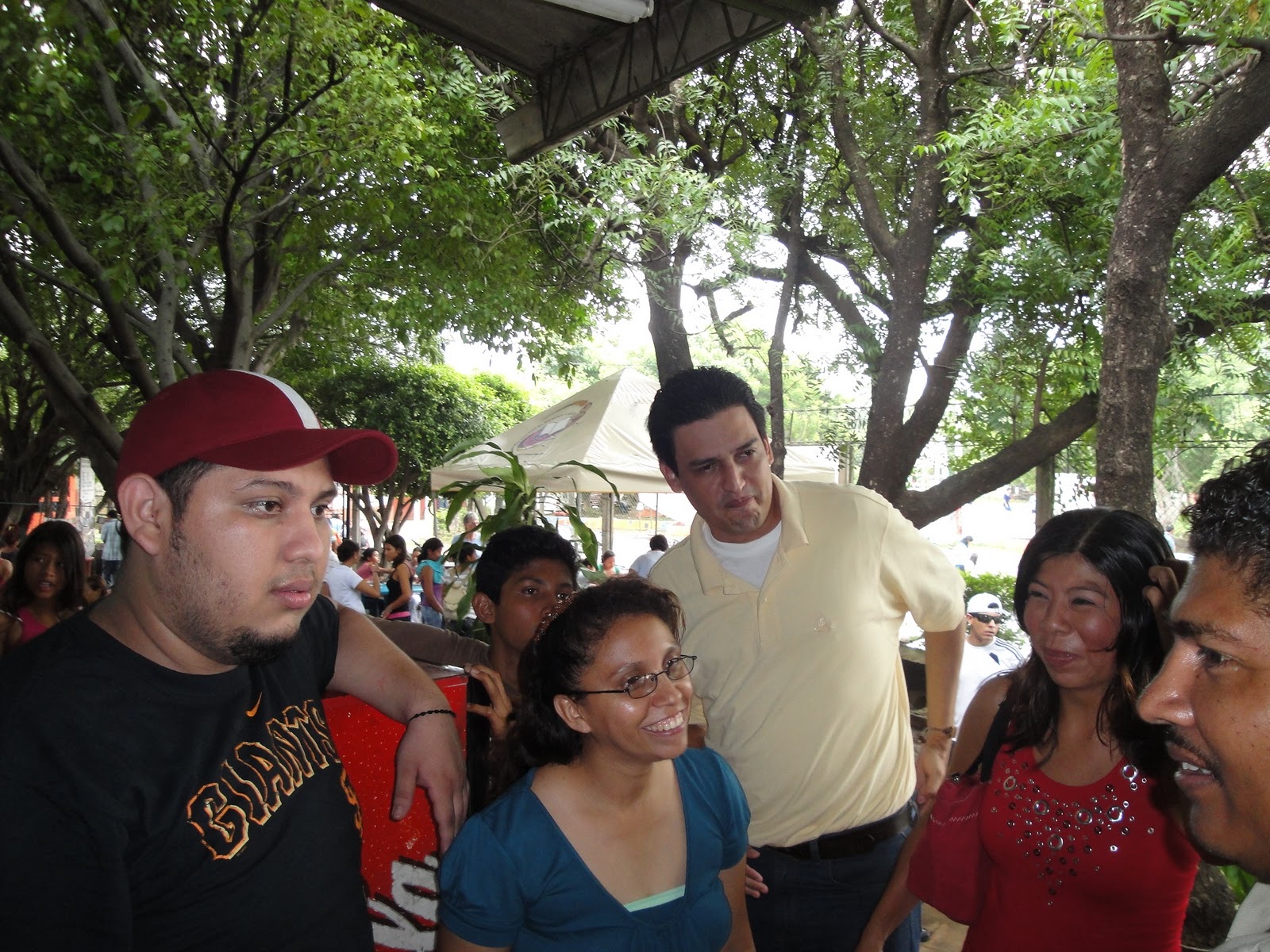


Last year, Amanda and I spent the morning hanging out with our English students selling tacos.  This year, however, we were busy preparing for the cultural event as part of the adult Latin rhythms dance class.  This meant reviewing choreography, putting on makeup, attaching the long yarn braids used in traditional Nicaraguan folkdance, putting on more makeup and stepping into the traditional full skirts and blouses, and of course, adding the finishing touches on the makeup.  The class had a lot of fun performing a folk dance and then doing a quick costume change before presenting the Wacka Wacka song by Shakira.  Other performing groups included the various levels of folk dance for youth and small ensembles from the CCBN orchestra.  It was a standing-room-only event and the audience thundered with applause and whistles after each number, friends and family of the performers snapping pictures and waving. 


The Kermes was a success.  Although the numbers are still out on total funds raised and number of people who attended, activities unfolded smoothly.  Pulling off an event like this is no small feat, and Ingrid, the CCBN receptionist and longtime choir member, and Mildred, Level III Basic Adult Education teacher, did a great job organizing everything.  Santos, Cándido, Antonio, and Ansony, did hours of heavy lifting to move furniture around to accommodate the various activities and bring in boxes of donated clothing and toys for the bazaar.  The administrative team and teachers worked hard to make sure that every last detail had been taken care of.  And on the day of the Kermes itself, friends and family of students and people from all over the neighborhood poured in through the gates to enjoy the festivities.  


The Butterfly Circus

They were all losers until one man discovered them.  

Check out this short film about community and finding your gift.

Monday, October 11, 2010

Join Us!

We are now accepting applications for volunteers beginning the summer of 2011! Click on the "Apply" page above to find a description of the position and the application. Let us know if you have any questions!

Thursday, September 30, 2010

Boys to Men, Part 2

Today I stumbled across an Atlantic Magazine article from a couple of months ago about the changing roles and accomplishments of women and men in today's society. Author Hanna Rosin suggests the possibility that “modern, postindustrial society is simply better suited to women,” and women are destined to be more successful than men from here on out. Complete with a video of Rosin’s kids and husband debating the pros and cons of boys versus girls, she goes in-depth into the statistics that show the ways in which women are dominating more and more aspects of society (mostly using examples from the U.S.) The article echoes so much of what I find myself ranting and raving about, but more than that, it echoes many of the comments I’ve heard from people I work with here in Batahola.

In a conversation about the differences between women and men earlier this year among some of the CCBN's staff, one of the female teachers said something to the effect of "Women do everything. They make the money, manage the money, take care of the house, and take care of the kids. They are naturally more responsible than men, so it fits that they make more decisions." I expected the room to explode, or at least a man or two to argue. But all I saw were heads nodding and a few people saying "asi es." I was shocked. It's well known that micro-lending organizations like Kiva (and even the Sandinista government's own zero-interest lending program) give the majority of their loans to women. The statistics prove that when a woman increases her income, the entire family benefits, as opposed to when a man increases his income and fails to share his new earnings with those around him in a sustainable way. However, seeing these facts on paper or discussed in the political realm is very different than hearing those around you, women and men, acknowledge that women are simply better at life than men. The other night a 7-year-old female friend of mine told me, somewhat out of the blue, “I like to hang out with women more than men. I spend more time with my mom than with my dad.” This might not seem like an unusual comment when considering the role of the absent father, but this little girl has a father who I consider to be an excellent parent. As much of a feminist as I consider myself to be, and perhaps because of my feminism, I found this comment quite alarming.

Perhaps the biggest concern is not the degree of truth in these statements, but what we, as a society, are doing about these perceptions. I have had countless conversations with the women closest to me (and those not-so-close to me) about what it means to be the best woman I can be in today’s world. How many of you men have had such a conversation? How many of us have really asked ourselves what we believe and what want to teach our children about gender identity? And how many of us have really thought about how to change the ways in which society dictates our gender roles without becoming identity-less? These are complicated questions that bring to mind infinite possibilities with serious implications for our future. And until we start reflecting and grappling and sharing about them with ourselves and with each other, we cannot act and make change.

Sojourner’s has an on-going conversation right now on this topic, and next month Richard Rohr (see previous post “Boys to Men”) will be hosting a live event entitled “Is It Really the End of Men?” which will be webcast, giving us all the opportunity to participate in the conversation.

Thursday, September 23, 2010

E and Me


As the door to the teacher’s lounge silently creeps open, I spot two tiny hands reaching around the edge of the door, quickly followed by a mischievously grinning face. As this little pixie spots me her grin grows wider and she charges towards me, practically knocking me out of my chair as she hugs me. E, the six-year-old daughter of a scholarship student in the CCBN’s daily computer class, has taken to accompanying her mom to the CCBN in the afternoons and visiting all her “amigas” aka gringa volunteer friends. Never mind my not-very-forceful comments that she really shouldn’t be back here, E just keeps chattering away about whatever first comes to mind. She often tells us about her two-year-old nephew’s antics, or the various pets she’s had over the years, or moments when she was surprised or scared. It is a nonstop monologue, incoherently jumping from one topic to another, and it can be annoying and endearing at the same time. But, as with most children here, if you start asking some basic questions about their home lives, you quickly realize that not all is as rosy as their smiles. For example, asking E about who helps her at home and who she talks to, she is quick to respond “No one.” Not in school, she’s often home alone, left to the devices of her own imagination for entertainment. There are days she comes in without having been bathed, wearing the same clothes as the day before, and days she casually mentions they didn’t have any food in their house for lunch. She is fiercely affectionate, and her hugs make me feel much better when I’m having a bad day. Today we spent half an hour playing around with the camera on my computer, making funny faces and exploring different effects. E was eager to learn how to point-and-click on her own, and her giggles of delight cracked me up.


Friday, August 27, 2010

Center Profiles: Project FED “Developing the capacity of CCBN students and staff to reduce the risk factors for gender-based violence”


Who is the leadership of the project, and how did you get involved?


Darling, Project Coordinator – I started working on violence prevention when I was 15 years old, at a personal level, by participating in young women’s reflection groups about rights, equality, gender, reproductive rights, sexuality, etc. After about 2 or 3 years I started to reproduce what I had learned and unlearned in those groups with other young women, especially young women in my rural community. I continued to work in and learn from a variety of women’s organizations and initiatives, and for three years coordinated an NGO’s violence prevention project. I was motivated to become a part of Project FED because it’s what I’ve had experience in, but I was also interested in how to bring the gender-based violence prevention theme to the area of arts and culture. I feel a personal and political commitment to institutionalize this work at the CCBN.

Teresa, Psychologist – I have 15 years of work experience on violence issues, including work in a variety of government ministries (health and family) and women’s organizations. My specialties are intra-family violence and sexual abuse, mostly working with survivors. I’ve liked working with women from a young age; my mother was a social feminist leader who taught me a lot. You have to have a lot of sensitivity to do this work, and you also have to be outside the cycles of violence to a certain extent.

Marco Aurelio, Psychologist/Promoter – I have worked in violence prevention since I was 17. I’m interested in all aspects of violence, including violence towards others but also violence towards ourselves. My specialties are sexuality and masculinities. I feel a personal and social commitment to this project, especially because my interest is working on a community level as opposed to an individual level. I want to help people make changes as a community to better themselves.

What is this project about?

This project is interesting for two concrete reasons: the goal of institutionalization of violence prevention (formation, awareness-raising, prevention, etc.) and how to orient everything that the CCBN does towards this institutionalization. In other words, how to give arts and culture activities the face of violence prevention.

What are the most pressing issues for the project?

We must invest energy into working with children and youth. An adult male said to us during one of our focal groups that “the reality is that I’m not going to change.” His attitude can change, and during the two years of the project we will keep sprinkling drops in the bucket and hopefully something will click. But the most important investment right now is with children and youth.

What kinds of activities will the project involve?

Formation activities, trainings, psychological attention, self-care and self-help groups, masculinity discussion groups, and prevention campaigns

Who will benefit from the project?

CCBN personnel, participants, and their families

Why is this project important to the CCBN?

The people have expressed how necessary it is. The CCBN has witnessed an increase in violence among women and children every year. They want to have knowledge about what violence is and practical tools to confront it. It’s a commitment on the part of the administration to figure out what to do to help solve the problem. The resources are all here, but we need to organize them and put them under a vision. It’s really about looking back at the roots of the CCBN, looking at the work that Angel and Margarita did and finding ways to continue that work. Our historical systematization shows how Margarita accompanied women in their transition from housewives to working outside the home. She accompanied them from a social empowerment perspective, telling them they could do it when they didn’t believe in themselves and challenging them to raise their self-esteem and work against the myths society tells women about themselves.

How do you find hope and motivation when you hear so many discouraging stories?

Marco Aurelio – Each of us lived a story of violence in our families. My motivation is that if I’ve been able to bring harmony to my life, others can do it, too. However, they need to have the right information and motivation. So my goal is to provide alternatives to violence that make sense in the context of each person’s reality as a way to lower violence in general.

Darling – Along with coming from a situation of violence, it’s a challenge for me to see how people can do things differently from their families. I’m motivated by the possibility of changing family dynamics and being able to choose the way you want to live.

Tere – Although I didn’t see a lot of violence in my house, I grew up without my father, and this motivated me because I believe that, for a child, it’s necessary for the family to live in harmony. However, if the family is going to live in violence, it’s better for them to be separated. It motivates me to collaborate in making new ways of relating to others, because sometimes people want to change, but they can’t do it alone and they need professional support to be able to overcome their struggles.

Saturday, August 14, 2010

Boys to Men

The world is broken. Yes, I knew that before coming to Nicaragua. In fact, I think I’ve had an acute awareness of this fact from a young age. But there are weeks here where I feel like I get hit over the head with evidence of it over and over and over again, and it wears me down, makes me tired, and makes it hard to keep going. On the one hand, when people confide in me, I feel humbled and so privileged to be able to learn from them and accompany them in their pain. On the other hand, I feel so helpless. If all this stuff is just a product of a broken world, what can I really do about it?

And why does it seem like men are so much more broken inside than women? I think women suffer so much hardship and violence at the hands of men, but at the same time, I see that they are stronger because of it; they survive and learn to thrive from it. Men just remain…broken, lost, and unable to identify and articulate how they feel. This is why gender issues are important to everyone, not just women. We are all negatively affected by inequalities based on societal definitions of our anatomy.

According to the book Elementos Sociopsicológicos de Victimología (Sociopsychological Elements of Victimology) from Mexico:

“The traditional model of masculinity is supported by two essential elements that make up a true psychological profile:
•Emotional restriction: not speaking about feelings, especially with other men.
•Obsession with achievement and success.

These two basic characteristics translate into a kind of relationship with the world characterized by:
•Limited affective and sexual conduct,
•Attitudes based on models of control, power, and competition,
•Health problems.”

I see endless examples of this analysis in both my work and community life here in Batahola. Men seeking advice about family and relationships who can’t talk to their best friends about their struggles because they feel a sense of competition with them and a lack of openness. Men who think that their self-worth comes from pleasing all those around them and always succeeding with women. Men who, when asked how they feel, can’t come up with an answer. According to Richard Rohr, founder of the Center for Action and Contemplation, this is not only a Latin American phenomenon. Through his experience leading men’s retreats he has concluded that Western men “[are] trapped inside, with almost no inner universe of deep meaning to heal [them] or guide [them].”

That’s not to say I haven’t met many deeply reflective men in Nicaragua. I have. It’s just that much of the human pain I see here (the pain we all experience as a result of living in a broken world) seems to stem from that explosive word “gender.” And as a young North American woman, I often don’t know how to respond to this pain in a culturally appropriate and knowledgeable way. So I find hope in the sharing of struggle and tend to do a lot of listening, a lot of hugging, and a lot of my own reflecting on how being a woman has shaped my identity for better and for worse.

Thursday, July 22, 2010

English vs. Life

This morning I gave an oral quiz in English class. The quiz was about the past tense (“What did you do yesterday?” “What did you do last weekend?”) and neighborhoods (“Are there any banks in your neighborhood?” “Is there much crime in your neighborhood?”) But before I got to those questions, I asked a simple “How are you?” Greta and I try as much as possible to keep up with what is going on in our students’ lives, but that’s not always easy to do when there are 20 of them. And when we do hear about how they’re doing on a more personal level, we are reminded of just how hard life can be here. It’s not that life isn’t hard in the U.S., it most certainly is, but at least in comparison to the places and situations I come from in the U.S., the people that I’m interacting with here on a daily basis have many more serious and frequent problemas. We have students who are struggling with difficult housemates and divorces, jobs where you work 60+ hours a week and unexpected pregnancies, machismo and transformation, and abusive relationships and insomnia. Not to mention the daily tasks required to run a household, raise children, and simply survive. Again, it’s not that these situations don’t exist in the U.S., but that a simple “How are you?” at the beginning of an English quiz brings an overwhelming torrent of struggle, heartache, and stress from several of my students.

Tuesday, July 20, 2010

Coro Angel Torrellas on YouTube

Go here to see videos of the CCBN's choir singing a wide range of opera choruses in last year's National Choral Season.